

 By
By I spent two years chasing aesthetics.
Counting reps.
Flexing in mirrors.
Obsessing over muscle definition.
Then I switched to powerlifting for six months.
Suddenly, I was moving weight I never thought possible.
Getting stronger every single week.
Feeling like an actual beast in the gym.
But here’s the thing.
Both felt incredible in completely different ways.
And both left me wondering: which one is actually better?
The answer isn’t what you think.
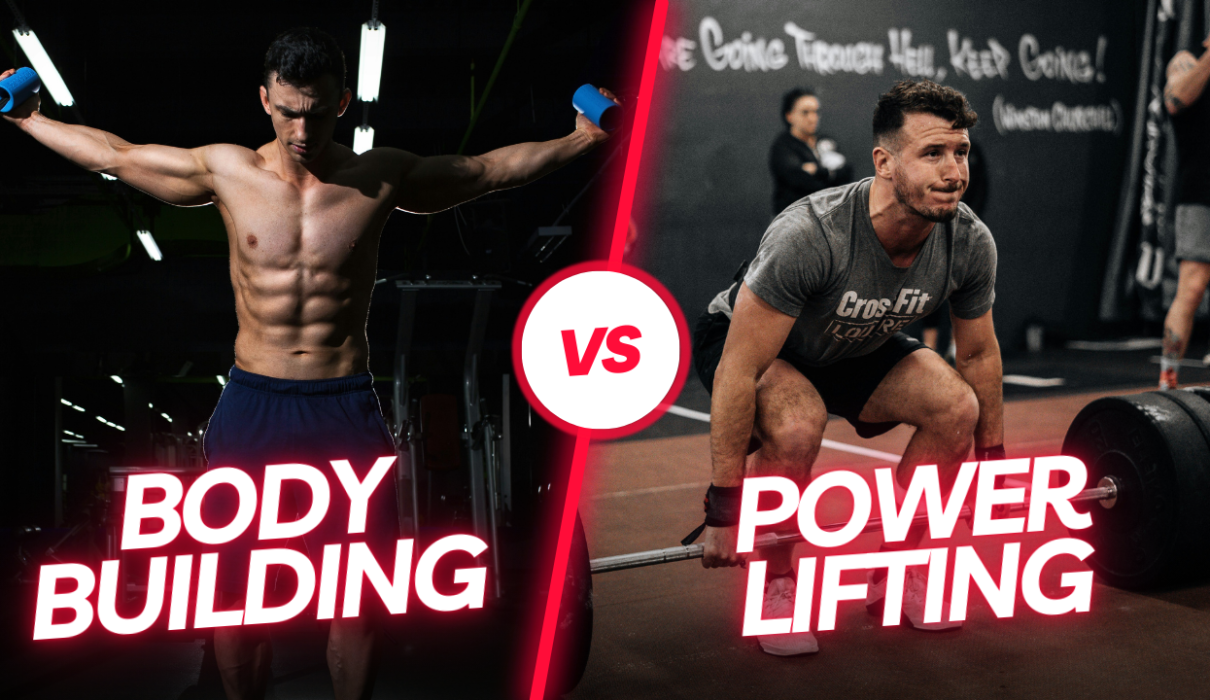
Because bodybuilding versus powerlifting isn’t about “better.”
It’s about what fits your goals, your personality, and your lifestyle.
Let me break down exactly what each one is, what they demand from you, and how to choose the right path.
What Is Bodybuilding?
Bodybuilding is training specifically to build muscle size, symmetry, and aesthetics.
The goal?
Look good.
Build a physique that’s balanced, proportional, and impressive.
You’re not training to lift the heaviest weight possible.
You’re training to stimulate maximum muscle growth.
That means:
- Higher rep ranges (8-15+ reps)
- Moderate to lighter weights with strict form
- Isolation exercises targeting specific muscles
- Shorter rest periods to keep intensity high
- Focus on time under tension and muscle contraction
Bodybuilders eat to fuel muscle growth and cut body fat to reveal definition.
Competitions judge you on size, symmetry, conditioning, and presentation.
Not on how much you can lift.
What Is Powerlifting?
Powerlifting is training specifically to lift the heaviest weight possible in three lifts:
- Squat
- Bench Press
- Deadlift
The goal?
Get strong..
Move maximum weight for a single rep.
You’re not worried about how you look.
You’re worried about how much you can lift.
That means:
- Lower rep ranges (1-5 reps)
- Heavy weights, maximal effort
- Focus on the “big three” compound lifts
- Longer rest periods (3-5+ minutes between sets)
- Technique and leverage optimization
Powerlifters eat to support strength and recovery.
Body composition matters less than performance.
Competitions judge you on one thing: total weight lifted across squat, bench, and deadlift.
That’s it.
Bodybuilding Versus Powerlifting: The Key Differences
Let’s get specific about how bodybuilding versus powerlifting actually plays out in real training.
Training Style
Bodybuilding:
- Split routines (chest day, back day, leg day, etc.)
- 8-20 reps per set
- Lots of exercises per muscle group
- Machines, cables, dumbbells, barbells
- Tempo control and squeeze at peak contraction
Powerlifting:
- Full-body or upper/lower splits
- 1-5 reps per set
- Heavy focus on squat, bench, and deadlift
- Mostly barbells and free weights
- Speed and explosiveness matter
If you want to know how to structure your training week for bodybuilding, I covered the best splits here: Workout Split Guide.
Diet Approach
Bodybuilding:
- Bulking and cutting phases
- Precise calorie and macro tracking
- High protein, moderate carbs and fats
- Meal timing matters for some
- Cutting down to very low body fat (6-10%)
Powerlifting:
- Eat to support performance and recovery
- Less emphasis on leanness
- High protein, high carbs for energy
- Body fat percentage less critical
- Some lifters stay lean, others don’t
Both benefit massively from creatine for performance and recovery. If you’re not using it yet, here’s why you should: Creatine Benefits.
Physique Results
Bodybuilding:
- Defined, aesthetic, symmetrical physique
- Visible abs, striations, muscle separation
- Balanced proportions across all muscle groups
- “Beach body” or “Instagram physique”
Powerlifting:
- Dense, thick, powerful-looking physique
- May carry more body fat
- Huge legs, back, and glutes
- “Strong guy” or “tank” look
Injury Risk
Bodybuilding:
- Lower injury risk overall
- Overuse injuries from high volume (tendonitis, joint wear)
- Muscle strains from pushing isolation exercises too hard
Powerlifting:
- Higher acute injury risk
- Heavy weights = more stress on joints, tendons, and spine
- Back injuries, shoulder impingement, and knee issues are more common
- Proper form and progression are critical
Mental Game
Bodybuilding:
- Requires discipline and patience
- Progress is slow and visual
- Constant self-evaluation (can be mentally tough)
- Community can be supportive or toxic, depending onthe environment
Powerlifting:
- Clear, objective progress (you lifted more weight)
- Competing against yourself or the barbell
- Less appearance-based stress
- Strong community culture around strength
Bodybuilding Versus Powerlifting: Pros and Cons
Let’s get real about the upsides and downsides of each.
Bodybuilding Pros
✓ You’ll look great year-round (if you stay lean)
✓ Lower injury risk compared to maximal lifting
✓ Improves symmetry, posture, and athleticism
✓ Flexible training (lots of exercise variety)
✓ Builds confidence through physical transformation
Bodybuilding Cons
✗ Requires a strict diet and consistency
✗ Progress can feel slow and frustrating
✗ Competitions are subjective (judges pick winners)
✗ Can become obsessive about appearance
✗ High-volume training can lead to overuse injuries
Powerlifting Pros
✓ Clear, measurable progress every week
✓ You’ll get incredibly strong
✓ Simple training focus (just three lifts)
✓ Less diet obsession required
✓ Competitions are objective (heaviest lifter wins)
Powerlifting Cons
✗ Higher injury risk from maximal loads
✗ You may not look as aesthetic
✗ Training can feel repetitive
✗ Requires long rest periods (longer workouts)
✗ Can be hard on joints over time
So… Which One Is Better?
Here’s the truth.
Bodybuilding versus powerlifting isn’t a battle.
It’s a choice based on what you value.
Choose Bodybuilding If:
- You want to look great and build an aesthetic physique
- You care about muscle definition and symmetry
- You enjoy variety in training
- You’re okay with strict diet phases
- You want lower injury risk overall
Choose Powerlifting If:
- You want to get as strong as possible
- You love the feeling of moving heavy weights
- You prefer simple, focused training
- You don’t care as much about visible abs
- You thrive on measurable, objective progress
Or… Do Both
Here’s what most people don’t realize.
You don’t have to pick one forever.
A lot of lifters do both.
They powerlift in the off-season to build strength.
Then they switch to bodybuilding-style training to lean out and look good.
This approach is called powerbuilding.
It combines:
- Heavy compound lifts for strength
- Isolation work for aesthetics
- Periodization (alternating focus throughout the year)
You get strong AND look great.
Best of both worlds.
My Personal Take on Bodybuilding Versus Powerlifting
I’ve done both.
And honestly?
I loved powerlifting for the mental clarity.
There’s something pure about lifting heavy weights.
No mirrors.
No posing.
Just you versus the barbell.
But I loved bodybuilding for the transformation.
Seeing my body change over months.
Feeling confident at the beach.
Building muscle in places I didn’t think I could.
Right now, I do a mix of both.
I hit heavy compound lifts twice a week.
The rest is bodybuilding-style volume work.
I’m strong enough to feel powerful.
Lean enough to feel confident.
That balance works for me.
Practical Training Advice for Both
Whether you choose bodybuilding, powerlifting, or a mix of both, here’s what actually matters.
For Bodybuilders:
- Train each muscle group 2x per week minimum
- Use progressive overload (add weight or reps over time)
- Don’t skip legs (seriously)
- Eat enough protein (0.8-1g per pound of body weight)
- Get lean gradually (lose 0.5-1% body weight per week when cutting)
For structured training programs, check out this guide: Best Workout Splits.
For Powerlifters:
- Master the technique before adding weight
- Follow a proven program (5/3/1, Starting Strength, etc.)
- Prioritize recovery (sleep, nutrition, deload weeks)
- Use accessories to strengthen weak points
- Don’t ego lift (perfect form > heavy weight)
And regardless of which path you choose, creatine is non-negotiable. Read more here: Why Every Lifter Needs Creatine.
Can You Switch Between Bodybuilding and Powerlifting?
Yes.
Absolutely.
In fact, switching between the two can be incredibly beneficial.
Powerlifting builds a strength base.
Bodybuilding builds muscle and aesthetics.
Together, they make you a more well-rounded lifter.
Some people alternate every few months.
Some do a powerlifting-focused off-season, then switch to bodybuilding prep for summer.
There’s no rule that says you have to marry one style forever.
Final Thoughts: It’s Not Bodybuilding Versus Powerlifting
It’s bodybuilding AND powerlifting.
Or bodybuilding OR powerlifting, depending on your current goals.
Both are legitimate.
Both build strength, discipline, and confidence.
Both will transform your body and mind.
The real question isn’t “which is better?”
It’s “which aligns with what I want right now?”
If you want to look great, go bodybuilding.
If you want to feel strong, go powerlifting.
If you want both, do powerbuilding.
There’s no wrong answer.
Just the one that keeps you training consistently, enjoying the process, and hitting your goals.
If you want:
- A beginner’s program for bodybuilding
- A beginner program for powerlifting
- Or a hybrid approach combining both
Just drop me a message…