

 By
By I used to buy the cheapest protein powder I could find.
“Protein is protein,” I thought.
Then I started getting bloated after every shake.
Gas.
Stomach discomfort.
Sluggish digestion.
I couldn’t figure out why until someone explained the difference between whey protein vs isolate.
Once I made the switch, everything changed.
No more bloating.
No more digestive issues.
Just clean protein that actually worked.
If you’re confused about whey protein vs isolate, let me clear it up.
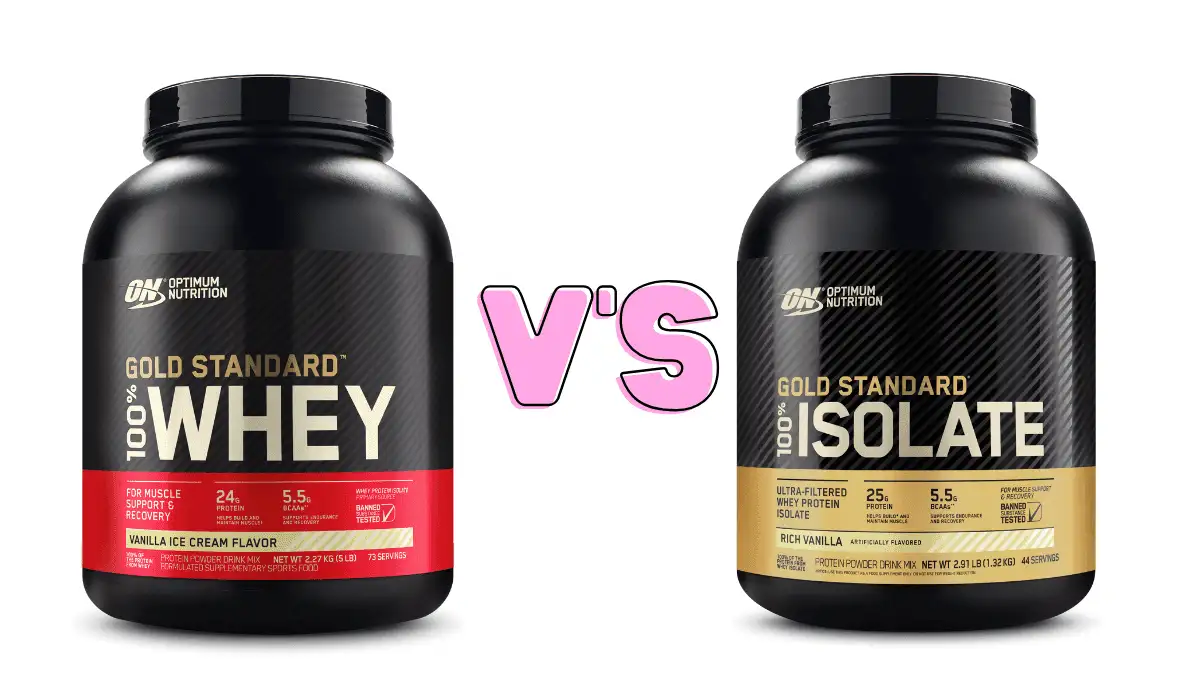
What’s the Difference Between Whey Protein vs Isolate?
Both come from milk.
Both build muscle.
But they’re processed differently, and that makes a huge difference.
Whey Protein Concentrate
This is the standard whey protein most people use.
It goes through basic filtering.
What you get:
- 70-80% protein per serving
- Some lactose (milk sugar)
- Some fats and carbs
- Cheaper price
Whey Protein Isolate
This goes through extra filtering to remove more lactose, fats, and carbs.
What you get:
- 90%+ protein per serving
- Almost zero lactose
- Minimal fats and carbs
- Higher price
The whey protein vs isolate debate really comes down to purity and how your body handles lactose.
Key Differences: Whey Protein vs Isolate
Let me break down the exact differences between whey protein and whey isolate.
Protein Content
Whey Concentrate: 70-80% protein
Whey Isolate: 90-95% protein
Isolate gives you more protein per scoop with less filler.
Lactose Content
Whey Concentrate: 3-5% lactose
Whey Isolate: Less than 1% lactose
If you’re lactose sensitive, this is the game-changer.
Fat and Carbs
Whey Concentrate: 3-5g fat, 3-6g carbs per serving
Whey Isolate: Less than 1g fat, less than 1g carbs per serving
If you’re cutting and tracking macros strictly, isolate makes it easier.
Digestion Speed
Whey Concentrate: Slightly slower absorption (due to fats and lactose)
Whey Isolate: Faster absorption (cleaner, purer protein)
Both are fast-digesting, but isolate hits your bloodstream quicker.
Price
Whey Concentrate: $30-50 per 5lb tub
Whey Isolate: $50-80 per 5lb tub
You pay more for the extra processing and purity.
When to Choose Whey Protein Concentrate
Whey concentrate isn’t inferior.
It’s just different.
Here’s when whey concentrate wins in the whey protein vs isolate debate:
✓ You have no lactose sensitivity issues
✓ You’re on a budget – Concentrate is cheaper and still effective
✓ You’re bulking – The extra carbs and fats can actually help
✓ You want a creamier taste – Concentrate usually tastes better
✓ You don’t have strict macro requirements
If you tolerate lactose fine and want solid protein without spending extra, concentrate is perfect.
When to Choose Whey Protein Isolate
Isolate is worth the extra cost in specific situations.
Here’s when isolate wins the whey protein vs isolate comparison:
✓ You’re lactose intolerant or sensitive – Isolate has almost no lactose
✓ You get bloated from regular whey – The extra filtering makes a huge difference
✓ You’re cutting and tracking macros tightly – More protein, fewer calories
✓ You want faster absorption post-workout – Isolate hits your system quicker
✓ You care about ingredient purity – Less filler, cleaner formula
If digestion is an issue or you’re serious about tracking macros, isolate is the better choice.
For more options if you’re dealing with lactose issues, check out this guide: Best Lactose-Free Bodybuilding Supplements.
The Lactose Factor (This Matters More Than You Think)
Most people don’t realize they’re lactose sensitive.
You don’t need to be fully lactose intolerant to suffer.
Even mild sensitivity causes:
- Bloating after protein shakes
- Gas and stomach discomfort
- Sluggish digestion
- Inflammation
If you experience any of these with regular whey, switching to isolate can be life-changing.
This is the biggest reason people choose isolate in the whey protein vs isolate debate.
Which One Builds More Muscle?
Here’s the honest answer.
Both whey protein vs isolate options build muscle equally well.
What matters is:
- Total daily protein intake (0.8-1g per pound of bodyweight)
- Consistency (hitting your protein target daily)
- Training stimulus (you have actually to lift weights)
Isolating doesn’t build more muscle just because it’s more expensive.
It just makes hitting your protein target easier if you have digestion issues or strict macros.
My Personal Experience with Whey Protein vs Isolate
I used concentrate for years.
It was fine.
Then I started cutting and tracking macros more strictly.
Concentrate had too many extra carbs and fats I didn’t want.
I switched to isolate.
Not only did my macros become easier to hit, but my digestion improved dramatically.
No more bloating.
No more feeling heavy after shakes.
Just clean protein that worked.
Now I use isolate year-round.
For me, the extra cost is worth the better digestion and cleaner macros.
Cost Analysis: Is Isolate Worth the Extra Money?
Let’s break down the whey protein vs isolate cost difference.
Whey Concentrate:
- $40 for 5lbs (70 servings)
- About $0.57 per serving
- 24g protein per serving
Whey Isolate:
- $65 for 5lbs (70 servings)
- About $0.93 per serving
- 28g protein per serving
Extra cost: About $25 more for isolate.
Is it worth it?
If you have zero lactose issues and aren’t cutting, probably not.
If you bloat easily, track macros strictly, or want cleaner ingredients, absolutely yes.
How to Decide: Whey Protein vs Isolate
Ask yourself these questions:
1. Do you get bloated or gassy from regular protein shakes?
If yes → Go with isolate.
If no → Concentrate is fine.
2. Are you tracking macros strictly (cutting, contest prep)?
If yes → Isolate makes life easier.
If no → Concentrate works great.
3. Is budget a concern?
If yes → Start with concentrate and upgrade if needed.
If no → Go straight to isolate for cleaner ingredients.
4. Do you care about ingredient purity?
If yes → Isolate has fewer fillers and additives.
If no → Concentrate delivers solid results for less.
What to Look for When Buying
Whether you choose whey protein or isolate, here’s what matters:
✓ Protein content: At least 20g per serving
✓ Ingredient list: Short and clean, no proprietary blends
✓ Third-party tested: Look for certifications (Informed Choice, NSF)
✓ Minimal fillers: Avoid excessive gums, thickeners, and artificial ingredients
✓ Good mixability: Should blend smooth without clumps
Don’t get fooled by fancy marketing.
Focus on quality ingredients and transparent labeling.
My Final “Boring” Tips
The whey protein vs isolate debate isn’t about which one is “better.”
It’s about which one fits your goals and digestive system.
If you tolerate lactose and want to save money, concentrate is solid.
If you have any digestive issues or track macros strictly, isolate is worth every penny.
I personally use isolate because:
- My digestion is better
- My macros are cleaner
- I don’t bloat after shakes
- I can train without stomach discomfort
But I used concentrate for years and built plenty of muscle with it.
Pick the one that fits your situation.
Stay consistent.
Hit your daily protein target.
And stop overthinking it.
If you want:
- Specific brand recommendations
- Dosing strategies for your goals
- Or help choosing the right protein for your situation
Tell me.